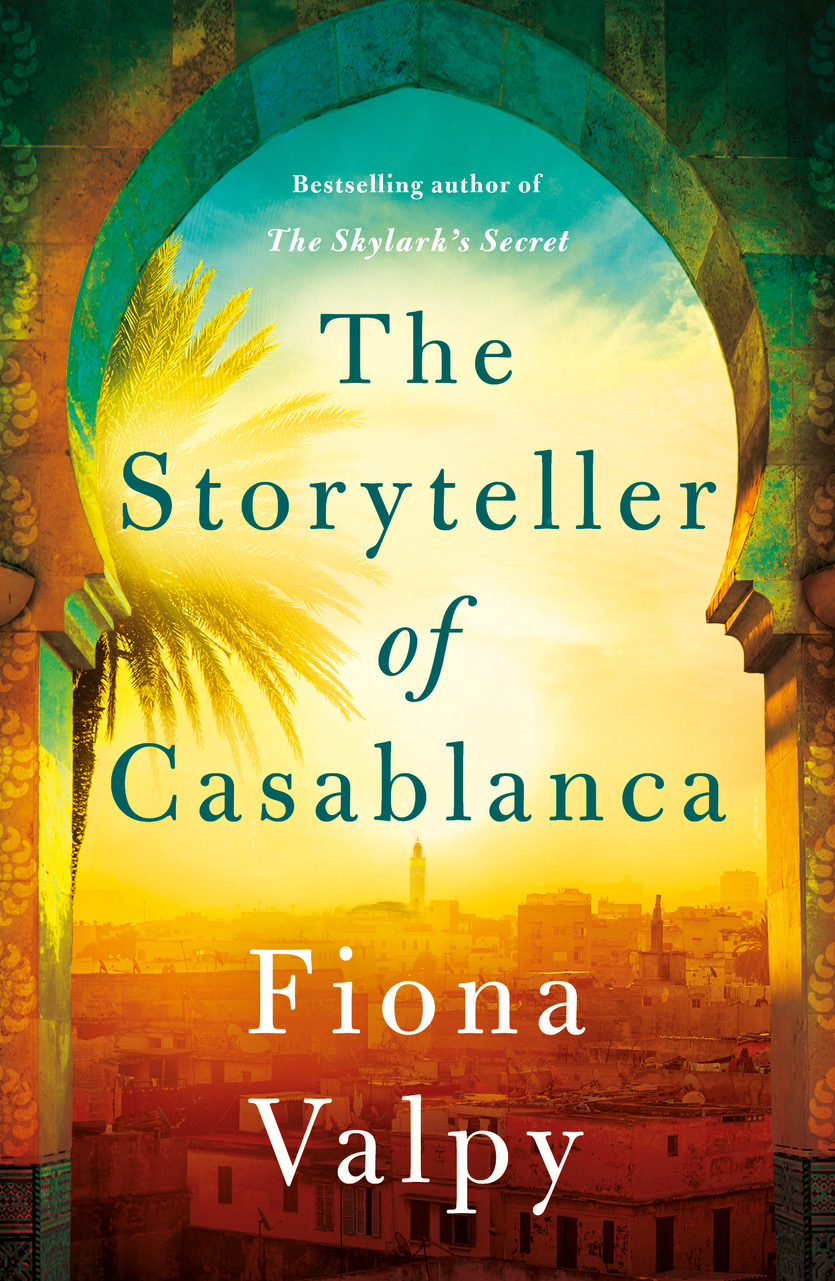
THE STORYTELLER OF CASABLANCA
The email arrived out of the blue. It was from a gentleman in America who’d read some of my books and kindly written to say how much he’d enjoyed them. He added a throwaway line at the end of his message saying he wished someone would write down the story of his wife’s experiences as a refugee in Casablanca during World War Two. Intrigued, I wrote back and gently enquired whether he’d be prepared to tell me more. I received no reply, but my interest was piqued. I’d already written several books set during the war, based in France and Scotland but, apart from having watched the iconic movie starring Bogart and Bergman, this North African strand of history wasn’t one I knew much about at all.
As I began to dig and delve, reading books and internet articles, I discovered the stories of an extraordinary cast of characters, part of the tide of refugees escaping as the Nazis over-ran Europe, who washed up in Casablanca as they tried desperately to arrange onward travel to Portugal and America. Travelling by boat from Marseille to Algeria and then onwards by whatever means of transport they could find, their journeys came to an abrupt standstill when they reached the Atlantic port. Here they were forced to remain for months – and sometimes years – as they tried to apply for entry visas to the USA, exit visas from Morocco and transit visas through Portugal, queuing at consulates and embassies for hours on end. Some of the refugees were relatively well-off, while others had nothing. All were forced to stay in makeshift camps until they could find accommodation in the city, either in the French-built Nouvelle Ville or in the Jewish Quarter, known as the Mellah.
As the novel took shape in my imagination, I was excited to have a research trip to Morocco organised. But, after forcing it to be postponed twice, the global pandemic finally and definitively stymied those plans. So I had to find other ways to fill in the gaps and ensure I could still transport the reader to that other time and place. I studied travel guides and pored over maps, but also read more widely around my subject, including novels by Driss ChraÏbi (The Simple Past), Paul Bowles (The Sheltering Sky) and Anthony Doerr’s Africa-based short stories (The Shell Collector). Meredith Hindley’s book Destination Casablanca offered a wealth of insight into the city during the war years and Hal Vaughan’s FDR’s 12 Apostles was a useful source of detail about the establishment of espionage networks in North Africa prior to the US invasion in November 1943.
Videos on YouTube helped me to visit the sights and souks, and the internet offered up additional information on some of the real-life historical characters that appear in the book, including Josephine Baker, the inspirational singer and performer, and the human rights lawer Hélêne Cazês-Bénatar. Other such characters, like the Englishwoman Dorothy Ellis who worked as a courier for the American intelligence network in Casablanca, proved to be frustratingly elusive despite all my research efforts, so I did the best I could and imagined the rest. My characters, both fictitious and real, took on lives of their own and helped my story unfold.
Storytelling is one of the key themes of the book and I’ve included it in many different forms – there’s everything from Charlotte Bronte’s Jane Eyre and the murder-mysteries of Dorothy L. Sayers, La Fontaine’s Fables, and traditional African and Berber Folk Stories, to the Tales from the Thousand and One Nights. I wanted to explore how the stories we tell are such an important part of our history and at the same time can inspire and shape our future, as well as illustrating the common ground between different cultures in the past and the present. There’s a universality in the human need to tell our stories and make our voices heard that transcends borders, cultures, race, religion, age and gender.
Once the book was published, there was one bit of unfinished business though: that still-elusive trip to Morocco. When the organisers of the biennial Marrakech Storytelling Festival heard about The Storyteller of Casablanca, they invited me to join them to give a talk about the book at the festival. While I was there, I was lucky enough to meet Brian Baker, one of Josephine’s adopted children, who told me he thought his mother would have loved my portrayal of her.
And so the book I wrote in lockdown has opened up new worlds for me. I ‘ve been back to Morocco several times now and have made lifelong friends there – including a certain Michael Kerrins! Stories really do have the power to change our lives.
About the book:
In this evocative tale from the bestselling author of The Dressmaker’s Gift, a strange new city offers a young girl hope. Can it also offer a lost soul a second chance?
Morocco, 1941. With France having fallen to Nazi occupation, twelve-year-old Josie has fled with her family to Casablanca, where they await safe passage to America. Life here is as intense as the sun, every sight, smell and sound overwhelming to the senses in a city filled with extraordinary characters. It’s a world away from the trouble back home―and Josie loves it.
Seventy years later, another new arrival in the intoxicating port city, Zoe, is struggling―with her marriage, her baby daughter and her new life as an expat in an unfamiliar place. But when she discovers a small wooden box and a diary from the 1940s beneath the floorboards of her daughter’s bedroom, Zoe enters the inner world of young Josie, who once looked out on the same view of the Atlantic Ocean, but who knew a very different Casablanca.
It’s not long before Zoe begins to see her adopted city through Josie’s eyes. But can a new perspective help her turn tragedy into hope, and find the comfort she needs to heal her broken heart?
Buy a copy here:
Fiona Valpy – author biography
Fiona is an acclaimed number 1 bestselling author, whose books have sold millions of copies and been translated into more than thirty different languages worldwide.
She draws inspiration from the stories of strong women, especially during the years of World War II. Her meticulous historical research enriches her writing with an evocative sense of time and place.\
She spent seven years living in France, having moved there from the UK in 2007, before returning to live in Scotland. Her love for both of these countries, their people and their histories, has found its way into the books she’s written.
More information about Fiona and her books can be found on her website: www.fionavalpy.com
© 2026 Fiona Valpy